01What it does
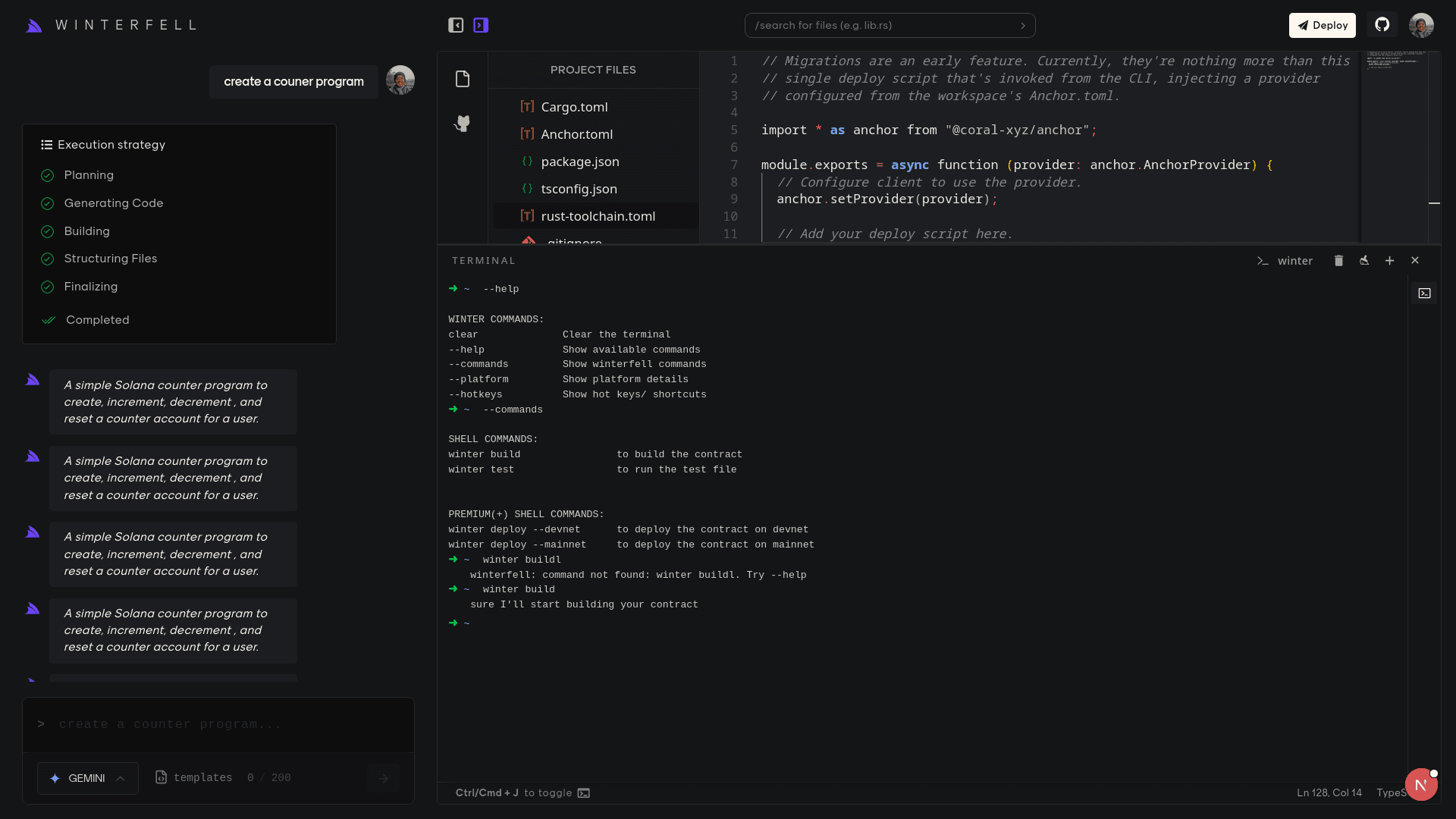
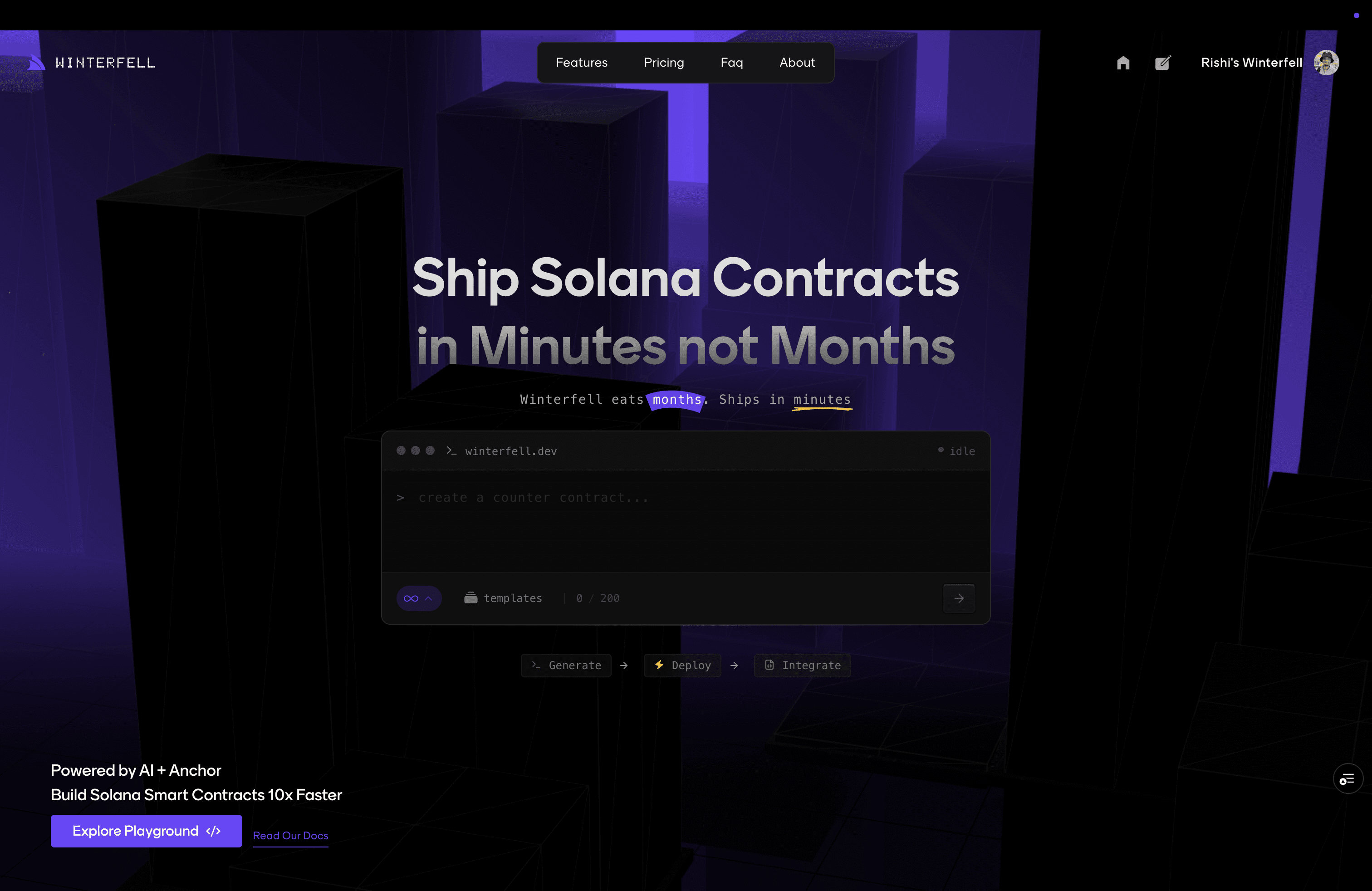
Winterfell is a browser IDE for Solana smart contracts. You describe a contract in plain words. A model writes a full Anchor project into the editor, and a terminal in the browser runs anchor build, test and deploy. It took first place at the Superteam India Hackathon.
I built the part that runs code we did not write: the Kubernetes build runners, the terminal that reaches them, and the pipeline that ships it all. I also built most of the frontend.
- Role
- Full-stack engineer. Build runners, terminal pipeline, CI/CD and frontend
- Team
- A small team. The code generator was led by a teammate
- Stack
- Next.js, Express on Bun, BullMQ, Redis, Postgres and Kubernetes
- Status
- Live at winterfell.dev
02The stack
- Frontend
- Next.jsMonacoTailwindFramer MotionGSAPWallet adapter
- Backend
- Express on BunwsBullMQOctokitStripeRazorpay
- Data
- PostgresPrisma 7RedisMinIO
- AI
- LangGraphPlanner, coder and finalizer models
- Infra
- Kubernetes JobsDockerGitHub ActionsEC2nginx
03Backend
What I solved on the backend
Every build runs in its own Kubernetes Job
Users run anchor build on code a model just wrote. That cannot happen on the API server.
Each command creates a Job with its own pod. The Job has a 900 second deadline, no retries, resource limits and an empty scratch workspace. It is removed 100 seconds after it finishes.
- Kubernetes Jobs
- Resource limits
- Pod exec
A terminal that crosses three services
The browser types a command, and the output comes from a pod that did not exist a second ago.
The socket service checks the JWT and puts the command on a queue. A worker creates the Job, waits for the pod, runs the command and streams the logs back over a Redis topic for that user and contract.
- ws
- BullMQ
- Redis topics
One command at a time per contract
Two builds on the same contract would fight over the same files.
The worker takes a Redis lock for the user and contract before it starts a Job. A build cache check runs first, so a repeat build can skip the queue.
- Redis locks
- Build cache
A push to prod is the deploy
Shipping by hand over SSH does not last past the first bad night.
GitHub Actions builds the server image with a layer cache, pushes it, then deploys to EC2 when the prod branch moves. A second workflow limits who can push there.
- GitHub Actions
- Docker
- EC2
Rate limits for each route
One contract generation costs real money in model calls.
Each route has its own window. Contract generation allows 10 calls in 15 minutes, and cheap routes get a looser limit.
- express-rate-limit
- Per-route windows
04Design
What I solved on the design side
An IDE that fits in a tab
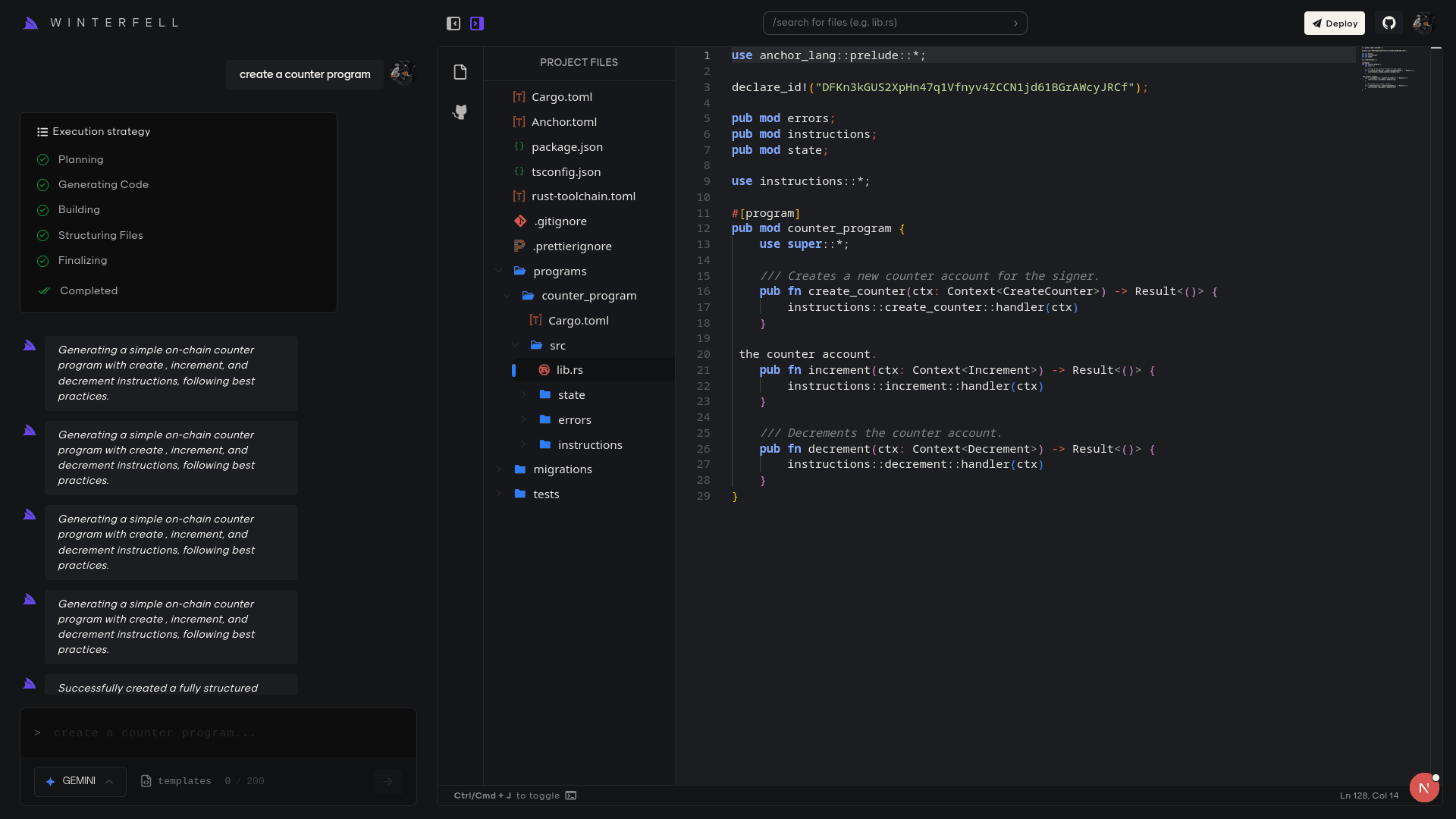
An editor, a file tree, a chat and a terminal all want the same screen.
The chat sits on the left and plans the work. The code, the file tree and the terminal share the right side, and files stream into the tree while the model writes them.
- Monaco
- File tree
- Streaming files
A terminal you trust
Build output from a far pod feels fake if it arrives in one block.
Logs show up line by line as the pod prints them, with the command, the state and the result each in their own colour.
- Live logs
- Terminal UI